Why are my Impact Crusher Blow Bars Breaking?
Cracked or broken blow bars? Common causes like tramp iron, wrong alloy, worn rotors and poor fit, and how to prevent them in your HSI crusher.
2 min read
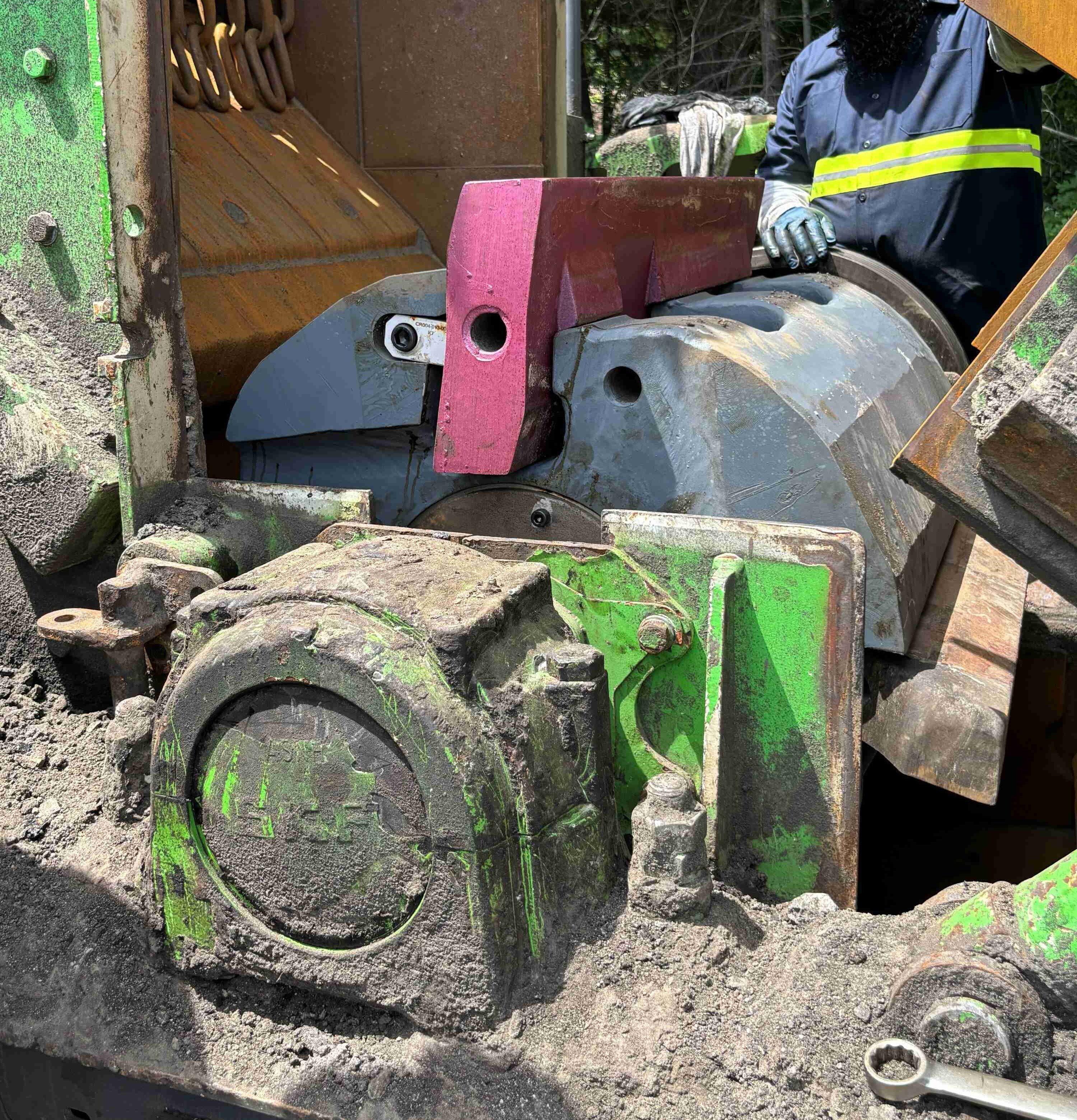
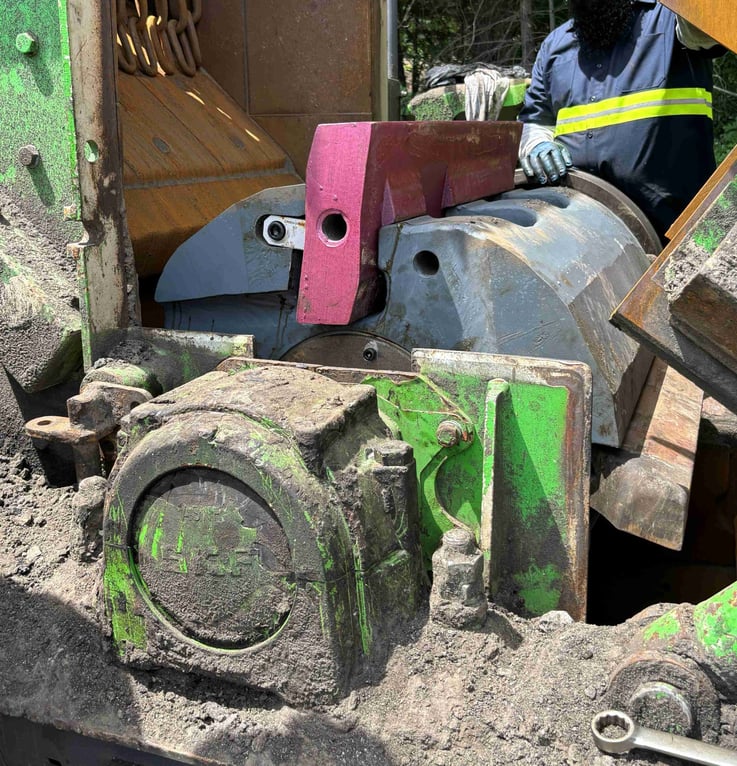
When blow bars crack, wear unevenly, or need changing sooner than expected, the casting usually gets the blame. In our experience, the cause is often found on the ground or inside the rotor instead. Before you switch alloys or suppliers, work through this checklist. It covers the same points AMCAST field representatives check during an on-site crusher evaluation.
Is the machine level? A crusher that is not set level loads its components unevenly and can hurt both screening and production.
Is the machine vibrating excessively? Abnormal vibration is often the first sign of a rotor balance or bearing problem.
What is under the machine? Look for water logging, soft ground, or rotten cribbing that lets the crusher shift or settle during operation.
How is it being fed? Feed should be steady and spread across the full width of the rotor. Uneven feed distribution and high fines content are common causes of grooved or uneven blow bar wear.
 |
 |
 |
 |
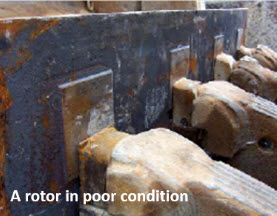
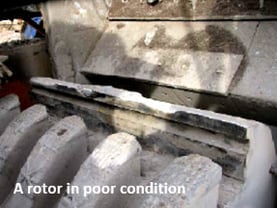
Shaft and bearings: Is the shaft cracked or bent? Check for run-out and worn bearings.
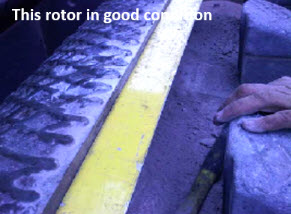
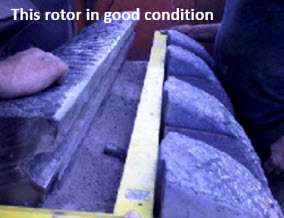
Blow bar seats: Blow bars should sit flat and fully supported against the rotor. Worn or damaged seats leave gaps that concentrate stress and lead to breakage.
Wedges and clamping: Make sure wedges are in good condition and tight. Recheck them a few hours after installing new blow bars and at regular intervals after that.
For more on how rotor and wedge problems cause failures, see Why Are My Impact Crusher Blow Bars Breaking?
Same alloy, same weight: All blow bars in a set should be the same alloy and closely matched in weight. Different alloys wear at different rates, so bars that start at the same weight can become mismatched over time.
Hardfacing: A poor hardfacing application on the rotor adds weight unevenly and can throw the rotor out of balance.
4-bar rotors: Install the two heaviest bars opposite each other and the next two heaviest bars opposite each other. The bars only need to match 2 + 2 to a set.
3-bar rotors: All three bars need to be closely matched.
Tolerances: Larger blow bars allow a greater weight difference between bars. The faster the rotor spins, the smaller the difference it can tolerate. Your machine manufacturer or casting supplier can confirm the tolerance for your crusher.
If the machine is level, the rotor is sound, and the bars are matched, but you are still seeing premature wear or breakage, the blow bar metallurgy may not suit the application. Feed size, abrasiveness, and tramp metal all determine whether a tougher martensitic alloy or a harder chrome white iron will last longer. Our guide to martensitic vs. high chrome blow bars walks through that decision.
AMCAST HSI blow bars are available in martensitic and chrome white iron alloys, with optional Ceramax™ or MasterCeramic™ inserts to extend wear life in abrasive applications.
Not sure where the problem is coming from? AMCAST field representatives can evaluate your crusher, feed material, wear patterns, and operating conditions, then recommend the right alloy and insert combination for your application. Contact us to schedule a site visit or request a quote.


Cracked or broken blow bars? Common causes like tramp iron, wrong alloy, worn rotors and poor fit, and how to prevent them in your HSI crusher.
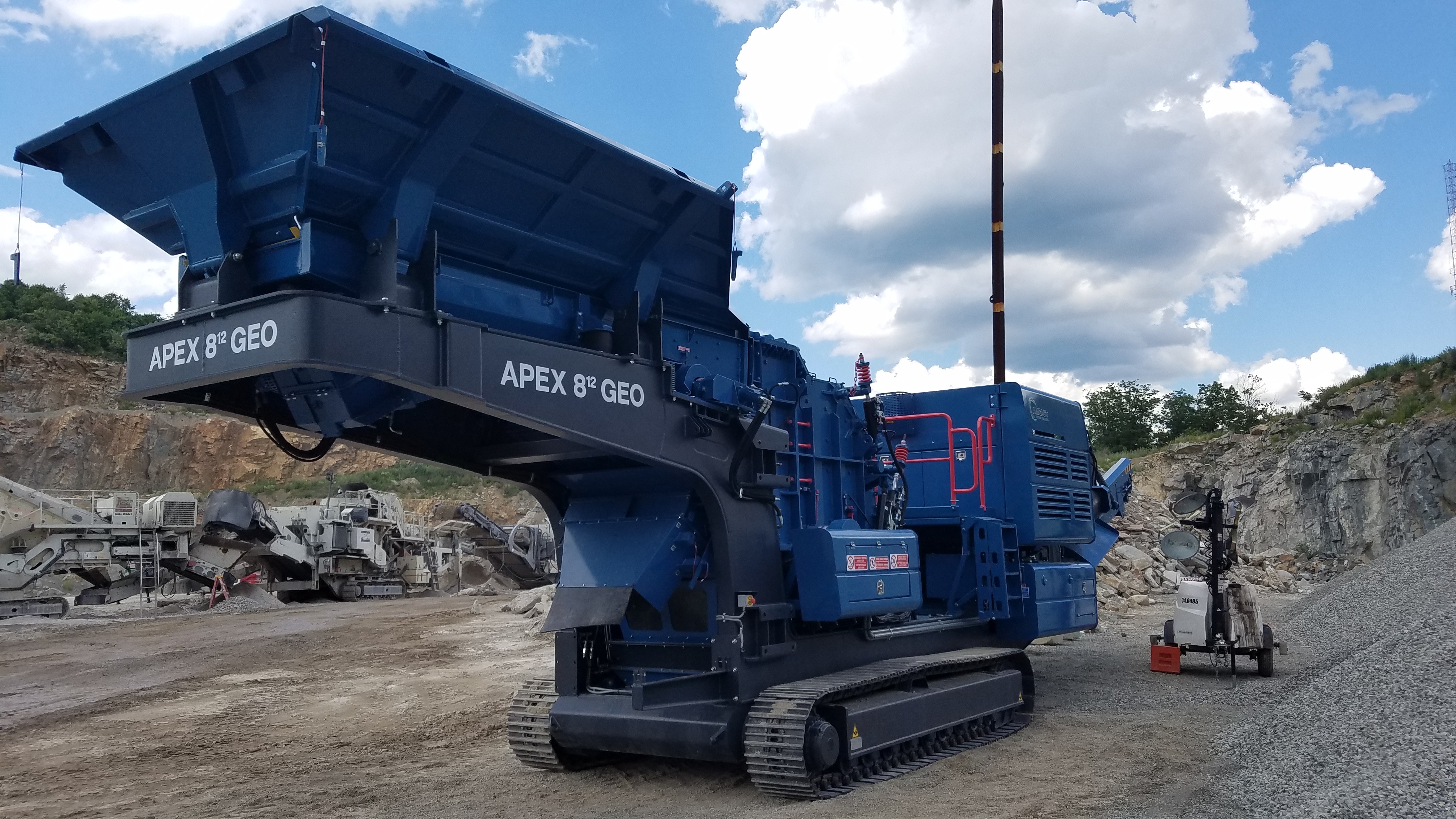
A practical mobile crusher maintenance guide: setup, feeding, dust control, daily inspections and wear part care for jaw, impact and cone crushers.

When a mobile impact crusher fits primary crushing, how to set up feed and prescreening, and which blow bar alloys hold up to large feed and tramp...