How to Choose the Right Blow Bar for your Crusher
How to Choose the Right Blow Bar for your Impact Crusher depends on many different factors.
11 min read

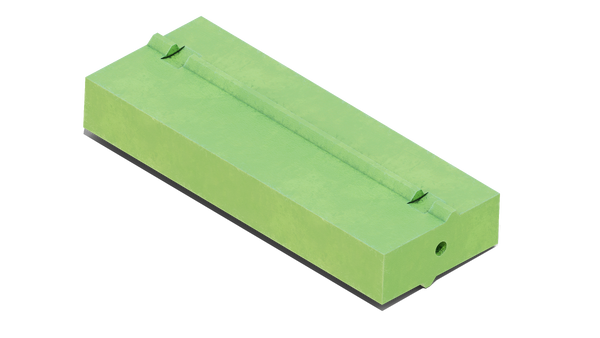
Every impact crusher operator knows the feeling: a blow bar cracks mid-shift, production stops, and the maintenance crew scrambles to get the rotor turning again. The difference between a profitable quarter and a frustrating one often comes down to one decision, choosing the right blow bar metallurgy for the material you are processing.
Low chrome martensitic blow bars and their +white iron counterparts sit at the center of that decision for aggregate, asphalt, and recycling operations across North America.
This guide breaks down the metallurgy, wear behavior, toughness characteristics, and application fit of low chrome martensitic and chrome white iron blow bars. You will learn how feed material, tramp metal risk, and crusher settings influence which alloy performs and which one fails prematurely.
Low chrome blow bars are cast steel wear parts containing a relatively small percentage of chromium, typically between 3% and 6%. That modest chromium content places them in the martensitic steel family, which is why the terms "low chrome" and "martensitic" are often used interchangeably in the crushing industry.
The microstructure of these alloys is predominantly martensite, a hard crystalline phase formed through controlled heat treatment.
Compared to high chrome white irons, low chrome martensitic steels sacrifice some abrasion resistance in exchange for significantly greater toughness and impact strength. This tradeoff makes them the preferred choice for applications where the feed contains large, irregular pieces or tramp metal contaminants that would crack a more brittle alloy.
Operators in aggregate, recycling, and demolition frequently rely on low chrome/ martensitic blow bars for primary crushing duties. The alloy absorbs repeated high-energy impacts without catastrophic failure, keeping the rotor in service longer between changeouts.
Understanding the distinction between martensitic steel and chrome white iron is essential for selecting the right blow bar. Chrome white iron alloys, including medium chrome (around 15% Cr) and high chrome (approximately 25% Cr), contain chemically bound carbon in the form of chromium carbides. These carbides are extremely hard and provide superior sliding abrasion resistance.
Martensitic steel, by contrast, achieves its hardness through a phase transformation during heat treatment rather than through carbide formation. The result is a microstructure that can absorb impact energy without fracturing. Hardness values for martensitic blow bars typically range from 48 to 54 HRC, while high chrome white irons reach 60 to 64 HRC.
That hardness gap explains the performance difference. High chrome bars outlast martensitic bars in clean, controlled, highly abrasive feeds like natural stone or asphalt. Martensitic bars survive in feeds that would shatter a high chrome bar, such as demolition concrete laced with rebar or oversized rock with unpredictable contaminants.
No single blow bar metallurgy works everywhere. The feed material entering your crusher dictates which alloy will perform and which will fail. Three feed characteristics matter most: particle size, abrasiveness, and tramp metal contamination.
Larger feed sizes generate higher impact forces when material strikes the rotor. A primary crusher accepting 24-inch-minus concrete needs blow bars with enough toughness to absorb that energy without cracking. Martensitic steels handle these conditions reliably. High chrome bars, despite their abrasion resistance, are more brittle and risk fracture under the same impact loads.
Silica content drives abrasiveness. Materials like granite, basalt, and reclaimed asphalt pavement (RAP) contain high percentages of silica that grind away at the blow bar surface.
If your feed is clean and controlled with minimal tramp metal, a high chrome + ceramic insert option often delivers longer wear life. When abrasiveness is moderate and impact risk is present, martensitic alloys with ceramic inserts offer a productive middle ground.
Recycling and demolition feeds carry rebar, wire mesh, bolts, and other metal objects that cannot be crushed. These contaminants strike the blow bar with concentrated force.
Chrome white iron alloys, being more brittle, can crack or shatter on impact with large tramp metal. Low chrome martensitic steels absorb these impacts and continue operating, making them the standard choice for recycling applications.
Wear behavior is where the metallurgical differences become visible during maintenance intervals. A 2025 study published in Applied Sciences examined how abrasive wear in quarry crushing equipment directly affects equipment reliability and maintenance scheduling.
Low chrome martensitic blow bars wear through a gradual erosion pattern. The bar surface wears evenly across the striking face, maintaining a predictable profile until the bar is ready to be flipped or replaced.
High chrome blow bars resist the same surface wear longer due to their carbide-rich microstructure, but they are prone to chipping and spalling when subjected to heavy impacts. A single piece of tramp metal or an oversized boulder can gouge or crack a chrome bar, removing material in large chunks rather than through gradual wear.
For operations crushing a consistent, clean, small-feed-size material, high chrome bars deliver more tons before replacement. For operations with variable feed, larger particle sizes, or any level of tramp metal contamination, martensitic bars provide more reliable and predictable performance.
Application fit matters more than alloy hardness numbers. Low chrome martensitic blow bars are the right choice for several common crushing scenarios.
Processing reclaimed concrete is one of the most demanding applications for blow bars. Rebar, wire, and embedded steel create constant impact events that would fracture chrome alloys. Martensitic blow bars withstand this abuse, and when paired with ceramic inserts, they maintain their wear profile longer while still resisting breakage.
AMCAST manufactures martensitic blow bars enhanced with Ceramax™ and MasterCeramic™ inserts specifically for concrete recycling operations where tramp metal is a constant challenge.
Quarry operations feeding large, irregular rock into a primary impactor need toughness above all else. The combination of high impact forces and variable feed size makes low chrome martensitic steel the practical choice.
Operators running primary circuits through limestone, dolomite, or mixed aggregate typically see consistent performance from low chrome martensitic bars with Ceramax™ or MasterCeramic™ inserts for extended wear life in more abrasive feeds.
Demolition debris contains everything from concrete and brick to steel, wood, and plastic. The unpredictability of the feed makes toughness non-negotiable. Low chrome martensitic bars handle the mixed impacts without cracking, keeping the crusher running through loads that would sideline a chrome bar.
High chrome blow bars earn their place in specific, controlled applications. If your feed is pre-screened, relatively small (under 8"), free of tramp metal, and highly abrasive, high chrome or chrome-ceramic bars can outperform martensitic options on a cost-per-ton basis.
Secondary and tertiary crushing stages typically see these conditions. The material has already been reduced in size, contaminants have been removed, and the remaining feed is uniformly abrasive. Asphalt plants processing clean RAP even in a primary impactor represent a classic high chrome application.
The key qualifier is "controlled." If there is any risk of tramp metal or oversized material reaching the rotor, high chrome bars become a liability rather than an asset. A single fracture event can cost more in downtime and replacement than the extended wear life would have saved.
Ceramic insert technology has changed the performance equation for both martensitic and chrome blow bars. Ceramic materials, with hardness values exceeding 1600 HV, resist abrasive wear far longer than any cast steel alloy. When strategically placed in high-wear zones of a blow bar, ceramic inserts protect the areas that wear fastest while the base alloy handles impact loads.
AMCAST and the F.A.R. Group have developed two proprietary insert technologies for impact crusher blow bars. Ceramax™ (CMX™) inserts offer an excellent balance of wear resistance and toughness for applications with variable feed and the potential for tramp iron. By integrating ceramic elements into carefully selected casting alloys, Ceramax™ combines ceramic abrasion resistance with the toughness needed to handle changing feed conditions and unexpected impacts.
MasterCeramic™ (MST™) technology offers enhanced wear life in applications where feed conditions and impacts are more controlled. Ceramic reinforcement is positioned in critical wear zones to extend service intervals and reduce the frequency of blow bar changeouts. Ceramax™ and MasterCeramic™ are available across AMCAST’s range of blow bar alloys, including F60™ Low Chrome Martensitic & F60-TX™ Toughened Low Chrome Martensitic, FX15™ Medium Chrome, and FX25™ and FX25/A™ Toughened High Chrome.
Heat treatment is what transforms raw cast steel into a functional blow bar. For martensitic steels, the process involves heating the casting to a specific temperature and then quenching it rapidly. This quench creates the martensitic microstructure, a needle-like crystalline pattern that provides hardness and strength.
The precise temperature, quench rate, and tempering process determine the final balance of hardness and toughness. For its intended application, a bar that is too hard becomes brittle and prone to cracking. A bar that is too soft wears too quickly.
AMCAST offers specialized heat treatments optimized for each application, including the F60-TX™ Toughened Martensitic Steel grade that delivers enhanced toughness for demanding impact applications where standard martensitic formulations reach their limits.
Chrome white irons also require careful heat treatment, but their hardness comes primarily from chromium carbide formation during solidification rather than from phase transformation during quenching. This fundamental difference in how the two alloy families achieve their mechanical properties explains why they behave so differently under impact.
Selecting the right alloy is only half the equation. How you operate the crusher directly influences how long your blow bars last.
Higher rotor speeds increase the velocity at which material impacts the blow bars. This produces a finer product but accelerates wear across all metallurgies. Running at lower speeds reduces wear, though it may produce more oversize material. Finding the right balance between product specification and wear life requires matching rotor speed to your target gradation.
Proper crusher settings ensure material flows through the chamber efficiently. An incorrect closed side setting (CSS) can cause material to recirculate, increasing the number of impacts each piece of rock makes against the blow bar before exiting the crusher. Regular CSS adjustments as breaker plates wear help maintain consistent chamber geometry and reduce unnecessary blow bar wear.
Fines entering the crusher act as an abrasive slurry that accelerates wear on all surfaces, including blow bars, breaker plates, and side liners. Pre-screening to remove fines before they reach the impactor is one of the most effective ways to extend blow bar life.
Maintaining a steady, even feed also prevents uneven wear patterns that can reduce the usable life of each bar.
Tracking blow bar performance gives you the data needed to make informed alloy decisions. Rather than relying on assumptions, measure what matters.
The true measure of blow bar value is cost per ton of material produced, not the purchase price of the bar. A bar that lasts twice as long and reduces downtime will deliver a lower cost per ton than one that requires frequent changeouts.
Calculate cost per ton by dividing total blow bar cost, including labor for changeouts and lost production during downtime, by the tons processed during the bar's service life.
For example, a set of blow bars processes 50,000 tons before replacement:
Cost per ton = $12,000 ÷ 50,000 tons = $0.24 per ton
Examining worn blow bars reveals how well the alloy matches the application. Even, gradual wear across the striking face indicates a good metallurgical match. Chipping, spalling, or cracking suggests the alloy lacks sufficient toughness for the feed conditions. Localized grooves or channels may indicate a fines problem, excessive moisture, or a feeder distribution issue rather than an alloy mismatch.
AMCAST field representatives regularly visit crushing sites to evaluate equipment, materials, wear patterns, and operating conditions. This site-specific analysis helps operations identify opportunities to improve wear life and reduce cost per ton by matching the right alloy and insert technology to the actual demands of the application.
Several recurring errors lead operators to choose the wrong blow bar for their application.
Many operators assume that medium chrome is a compromise between low chrome and high chrome. In reality, medium chrome alloys belong to the white iron family and behave much more like high chrome than low chrome in terms of toughness and impact resistance.
Selecting based on chrome percentage without understanding the underlying metallurgy can lead to premature failures.
Operators who switch from martensitic to high chrome bars to gain abrasion resistance sometimes overlook the tramp metal present in their feed. Even occasional pieces of rebar or other small metal contaminants can fracture a chrome bar, creating unplanned downtime that erases any wear-life advantage the chrome alloy might have provided.
Worn breaker plates, damaged rotor bodies, or clogged grizzly bars all accelerate blow bar wear regardless of the alloy. Addressing these maintenance items before blaming the blow bar metallurgy often solves the problem at a lower cost.
A thorough crusher maintenance program protects your wear parts investment. Operations that invest in premium wear parts across their entire crushing circuit see compounding returns in uptime and cost per ton.
Follow this process to match blow bar metallurgy to your crushing operation.
Identify the material you are processing, its maximum feed size, silica content, moisture level, and the presence of any tramp metal or uncrushable contaminants. This baseline data drives every subsequent decision.
If your feed contains rebar, wire mesh, bolts, or other steel contaminants, high chrome blow bars should be eliminated from consideration. Martensitic steels enhanced with ceramic inserts, are the appropriate starting point for any feed with tramp metal.
For clean, highly abrasive feeds with no tramp metal, high chrome ceramic bars may deliver the longest wear life. For moderate abrasiveness with some impact risk, martensitic bars with ceramic inserts provide a productive balance.
Primary crushing demands toughness. Secondary and tertiary stages, where feed is pre-sized and cleaned, can tolerate harder, more brittle alloys. Match toughness requirements to the position in your circuit.
No guide replaces an on-site evaluation. AMCAST offers application-driven assessments where product application experts evaluate your crusher, feed material, and operating conditions to recommend the optimal alloy and insert combination for your specific operation.
AMCAST approaches blow bar selection differently from conventional parts suppliers. Rather than offering a catalog of standard options, the company engineers application specific solutions built around the demands of each crushing operation.
The process begins with understanding the operation: what material is being crushed, the feed characteristics, rotor condition, and operating environment. From there, AMCAST selects the optimal combination of alloy and insert technology.
The product portfolio includes F60™ Low Chrome Martensitic for standard-duty impact applications, F60-TX™ Toughened Martensitic Steel for demanding conditions, and FX15™, FX25™ & FX25/A™ Chrome White Iron for clean, highly abrasive secondary and tertiary applications.
Performance does not end at delivery. Am Cast, Inc. remains involved through field verification, evaluating wear patterns and operating results to confirm the selected solution is delivering the expected value. This Material Science-driven approach, treating crusher wear parts as engineered assets rather than disposable expenses, is what separates application-matched solutions from generic, one-size-fits-all parts programs.
Low chrome blow bars are a type of martensitic steel. The terms are used interchangeably in the crushing industry because low chrome alloys develop a martensitic microstructure during heat treatment. The distinction matters when comparing them to medium chrome or high chrome alloys, which belong to the white iron family.
Martensitic blow bars with ceramic inserts typically deliver the longest service life in concrete recycling. The martensitic base alloy absorbs impacts from rebar and tramp metal, while the ceramic inserts resist abrasive wear from the concrete itself. AMCAST's Ceramax™ and MasterCeramic™ blow bars are specifically engineered for this demanding application.
High chrome blow bars are not recommended for primary recycling applications where rebar or other tramp metal is present. The brittle nature of chrome white iron makes it susceptible to cracking on impact with steel contaminants. A single fracture event can halt production and require an emergency changeout.
Monitor wear by measuring bar thickness at regular intervals. Replace or flip bars before they wear past the OEM's recommended minimum thickness to avoid damage to the rotor body.
F60™ Martensitic Steel is AMCAST's standard martensitic alloy, providing high hardness and reliable wear resistance for general impact crushing. F60-TX™ Toughened Martensitic Steel is an engineered grade that delivers enhanced toughness for applications where standard martensitic formulations may be at risk of cracking under extreme impact conditions.
Ceramax™ and MasterCeramic™ inserts are high-hardness ceramic elements strategically integrated into the blow bar's alloy-steel body. They protect critical wear zones where abrasion is most severe, extending the bar's service interval while the base alloy continues to handle impact loads. AMCAST and F.A.R. Group engineers the insert placement for each application to maximize performance.
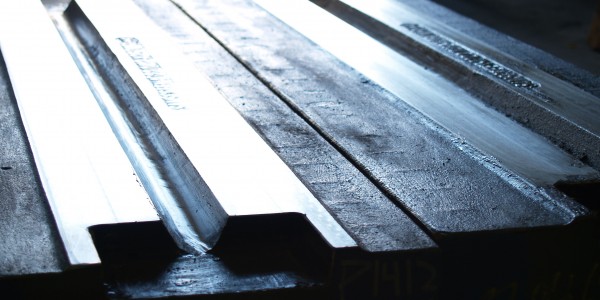
How to Choose the Right Blow Bar for your Impact Crusher depends on many different factors.
.jpg)
Choosing the Right Rock Crushing Equipment allows you to maximize production output and save on operating costs.

Check out the most common reasons why the blow bars in your impact crusher continue to break prematurely.